
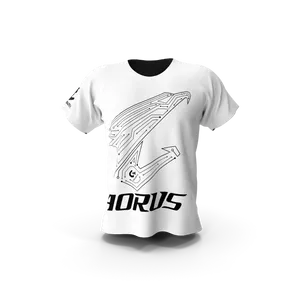
Streetwear sells an intended fit. A boxy tee and a slim tee are the same garment photographed flat; the difference is the whole reason someone picks one over the other. "Oversized" on a hanger is a guess about how far past the shoulder it will sit.
What the try-on shows
Where the shoulder seam lands, how far past the hip the hem goes, how much room there is through the body — on the person asking, not on a six-foot fit model. For a category built on deliberate proportion, that is close to the entire buying question.
Layering, properly
Streetwear is layered by default: tee under hoodie under jacket. Send them as one outfit and they compose in a single generation for one credit, in the order given. A shopper who can see the hoodie over the tee they already own from you is a shopper looking at a basket, not a product.
What to expect
Graphics are the honest caveat. A large front print will come through in position and rough character, but text and logos are where image models are weakest — expect an approximation of a wordmark rather than a reproduction of it. If your range is graphic-led, keep the product shot next to the try-on and treat the try-on as the fit answer, not the artwork answer.
Solid colourways and heavy silhouettes reproduce best. That is convenient, because silhouette is what the category is about.