
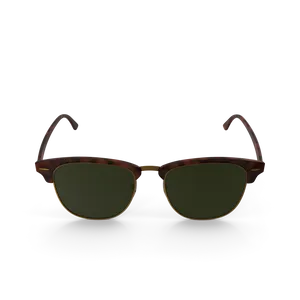


Nobody can tell whether a frame suits them from a photograph of the frame. Face shape is the variable and it is not in the picture. It is the clearest case in retail for showing the product on the person.
It is also the category where generation has the least margin, and it would be dishonest to sell the first point without the second.
Why it is harder than clothing
A garment is judged at body scale: a slightly wrong seam position is invisible. Glasses are judged at face scale, on a face the shopper knows better than any other image they will see that day. Small errors in how the frame sits — bridge position, temple angle, how much of the brow it cuts — are immediately obvious in a way that a slightly wrong hem is not.
Our pipeline is built for garments. Glasses work through the same path, and we have not run a category-specific quality benchmark on them. Treat this page as a description of the mechanism, not a performance claim.
What helps
A straight-on, well-lit, face-forward photograph. Off-angle shots are where frame placement goes wrong first. A clean product image of the frame against a plain background gives the model the clearest read of shape and colour.
What to expect
Overall frame shape, proportion against the face and colour come through. Fine detail — hinge hardware, a subtle temple pattern, brand marking — does not reliably. Lens tint reads as an impression rather than a specification.