
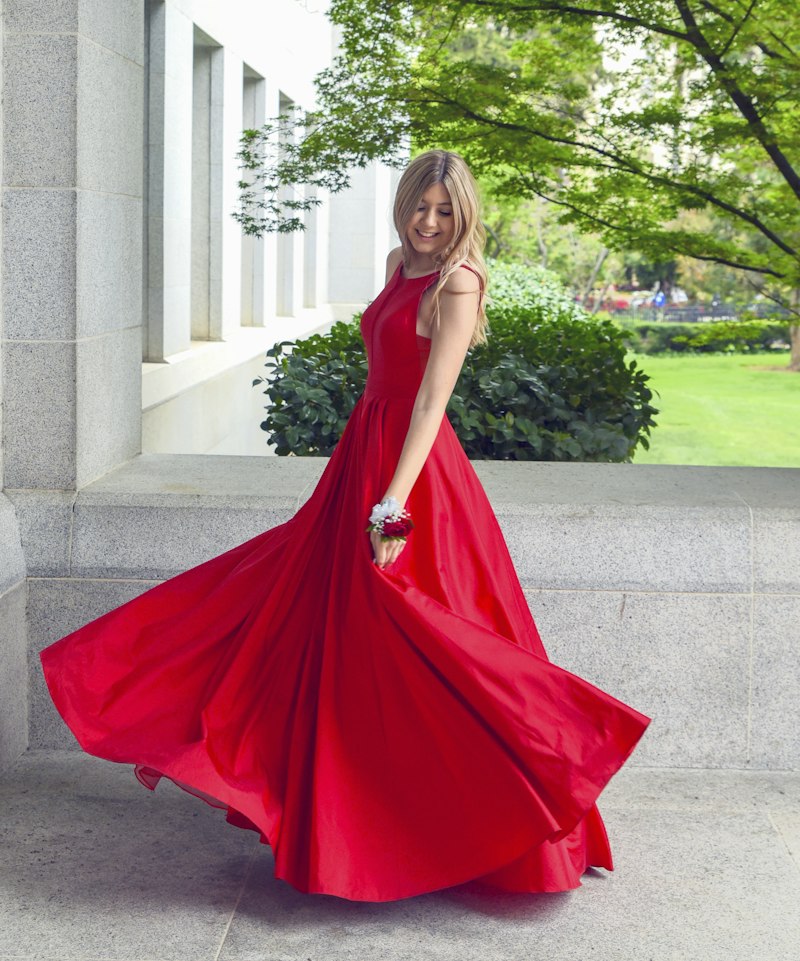


A shirt is forgiving. A dress is not: it is one garment carrying the whole outfit, and the three things a shopper hesitates over — how it drapes, where the hem lands, what shape it makes — are all properties of a body, not of a garment. The studio photograph answers them for the model who wore it.
What the try-on shows
The shopper's own proportions wearing your dress: where the waist sits on them, how the skirt falls from it, roughly where the hem lands. That is the question behind most dress hesitation, and it is the one a size chart cannot reach.
Dresses are the strongest category in this pipeline for a structural reason — a dress is a single garment. There is no layering to compose, no under-layer showing through, no ordering problem. One photo, one product, one generation.
What it does not show
It is not a fit or sizing tool. The result is a generated image, not a measurement. It will not tell a shopper whether the size 12 fits, and you should not present it as if it did — the terms make that your responsibility because it is your storefront saying it.
Fine detail is where a generated image is weakest. Beading, lace pattern, a precise print repeat: expect the impression to be right and the detail to be approximate. Keep the product photography on the page. Try-on sits beside it, not in place of it.
Getting good results
Full-length garments need full-length photographs. A shopper who uploads a headshot has given the model nothing below the waist to work with, and the widget's own prompt asks for a full-body shot for exactly this reason.
Your catalogue image matters as much as theirs. A clean, front-facing garment shot on a plain background gives the model an unambiguous read of the silhouette; a styled editorial crop with the hem out of frame does not.